November 9, 2026

8
min read
AI Training Data Demand Tracker: Where AI Labs Spend
See where AI training data demand and money are concentrating across video, text and audio. A free, live tracker scoring 10 categories on public evidence.
See where AI training data demand and money are concentrating across video, text and audio. A free, live tracker scoring 10 categories on public evidence.
Everyone agrees AI training data is valuable. Almost nobody can tell you which data, how valuable, or who is actually paying for it. Most licensing contracts are private, pricing is opaque, and the headlines mix real deals with lawsuits and speculation.
So we built a way to see it. The Versos AI Training Data Demand Tracker is a free, live read of where AI training data demand and money are concentrating across video, text and audio. It scores 10 data categories on public evidence and refreshes as new signals land.
Explore the AI Training Data Demand Tracker
The tracker monitors public reporting on model launches, licensing deals, investments and court filings, then turns that reporting into a ranked demand index for each category of training data.
Each category is scored from 1 to 5 on three forces:
The three scores roll up into a demand index from 0 to 100, which ranks the matrix from hottest to coldest. The pipeline runs in four steps: monitor, score, rank, refresh.
Here is the demand matrix as of 9 November 2026. Scores are shown as capability heat / scarcity / proven spend.
Scripted film and TV is the rights-clean, exclusive footage frontier labs want most and cannot scrape. The signals are concrete. Disney's agreement bringing its characters to OpenAI's Sora came paired with a reported investment of roughly $1B. Google is reportedly courting Hollywood studios for AI video rights at around $40M per copyrighted character. The MPA signed an AI copyright pact with ByteDance covering IP in its Seedance video models.
Real-world footage for world models and egocentric robotics data follow close behind. Mecka raised a $60M Series B to supply human-motion data to robotics labs, and Baidu launched Apollo World, a world model that simulates interactive road environments to train robotaxis.
Stock and B-roll sits at the bottom. Generic footage is abundant and largely commoditized. In video, the gap between content and training-grade content is wider than in any other modality.
Text is where the most money has been disclosed. Reddit's licensing run-rate is reported at $60M to $70M a year across Google and OpenAI. News Corp's deal with OpenAI is worth $250M+ over five years, the publisher benchmark. In November 2026, Anthropic signed its first paid content and data licensing deal with a news publisher, the Associated Press, with terms undisclosed. Code scores high on capability heat, but no meaningful public pricing has surfaced yet.
In audio, much of the price discovery is happening in court. Reservoir and Shapiro Bernstein are seeking roughly $340M combined from Suno and Anthropic. The Elvis Presley estate is seeking about $41M from Anthropic at $150K per track, and Eminem's publisher Eight Mile Style is seeking $40M+ from Suno over 269 songs. These are amounts claimed, not awarded, but they show how rights holders value their catalogs when the alternative is a licence.
Most contracts stay private. These disclosed figures are the visible edge of a much larger market:
Treat these as directional. Figures marked reported are not contract-confirmed.
Want to know where your library sits on this curve? Get a free Content Value Assessment.
Versos is a data exchange connecting AI builders with premium video libraries. We give rights holders the infrastructure to index, prepare, license and deliver their content, with C2PA provenance and a full chain of custody built in. You can browse the libraries in the Versos Library Network.
We built the tracker because both sides of the market are making decisions with too little information. It applies the same discipline we use on video data to the demand side: public sources, scored consistently, kept current.
It measures which kinds of data AI developers are actively seeking and paying to license. The Versos tracker scores it on capability heat, scarcity and proven spend.
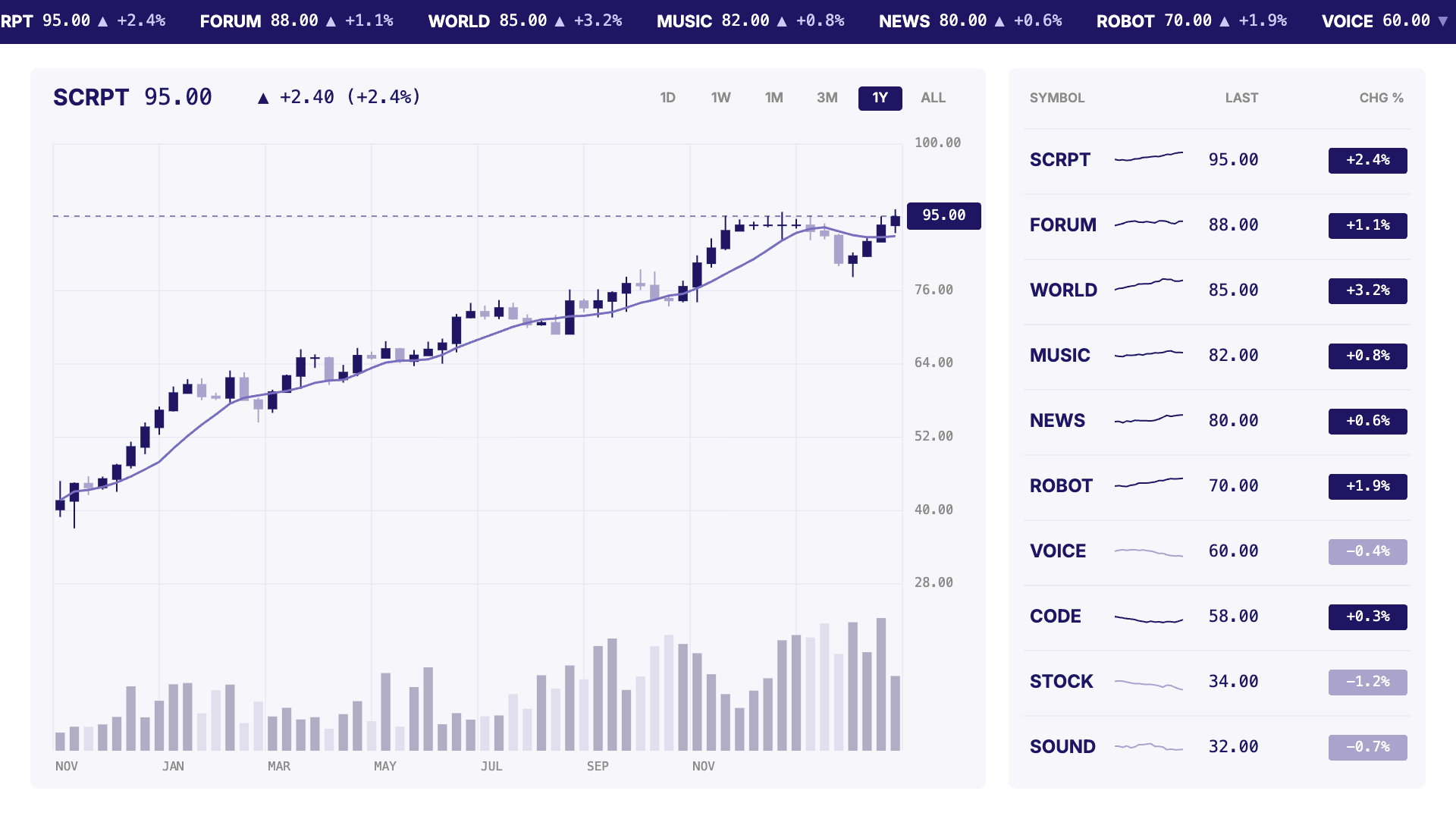
As of November 2026, scripted film and TV video ranks highest with a demand index of 95, followed by forums and community text (88) and real-world world-model video (85).
Disclosed signals put quality licensed video at $1 to $4 per minute, with premiums for 4K, drone and exclusive footage. Major text deals run from tens to hundreds of millions of dollars. Most contracts are private, so treat public figures as directional.
Grand View Research projects the AI training data market will reach $16.3B by 2033, growing about 22.6% a year across all modalities.
Only from named public sources, including Variety, TechCrunch, Press Gazette, Nieman Lab, Rolling Stone and company announcements. No Versos customer or private data is used.
It refreshes continuously as new public evidence lands. The latest refresh date is shown at the top of the tracker.
Start with a Content Value Assessment to see how your library maps to current demand, then talk to Versos about preparing, licensing and delivering it with full provenance.
Whether you’re a studio looking to monetize your archive or an AI team searching for structured, licensed training data, we’re here to help.